
Australian Mountain Doodle & Bernedoodle Colors
Doodle Colors & Patterns
One of my favorite things about Doodle’s is their kaleidoscope of colors.
The color or pattern of the puppies is contingent on the parents. Not just their visible color, but the hidden and recessive genes they may carry. A good breeder knows the genetic testing results of their parents and the potential colors they may get in the litter. That said, Mother Nature is in charge here and just because two parents can produce a color, doesn’t mean your litter will have them.
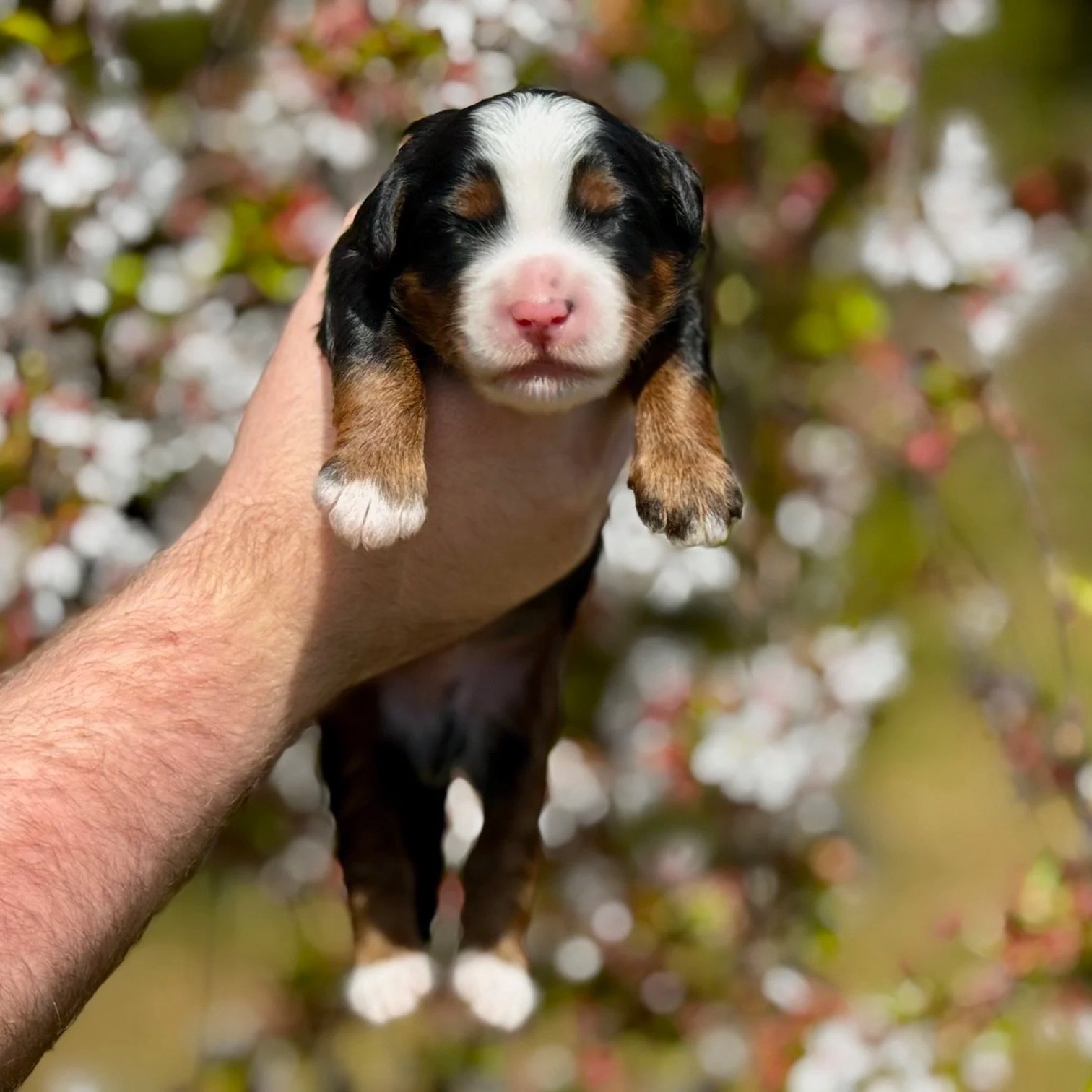
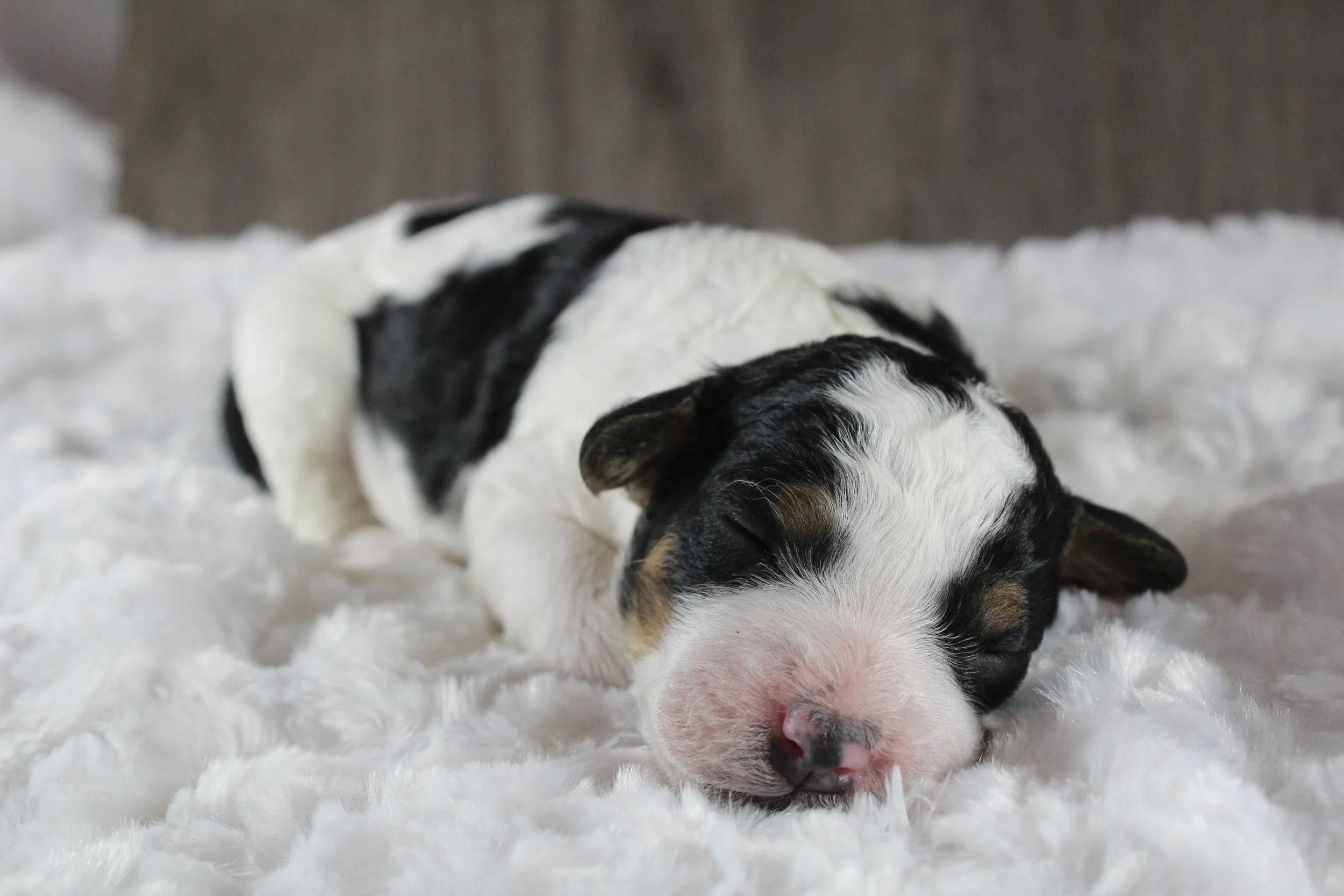
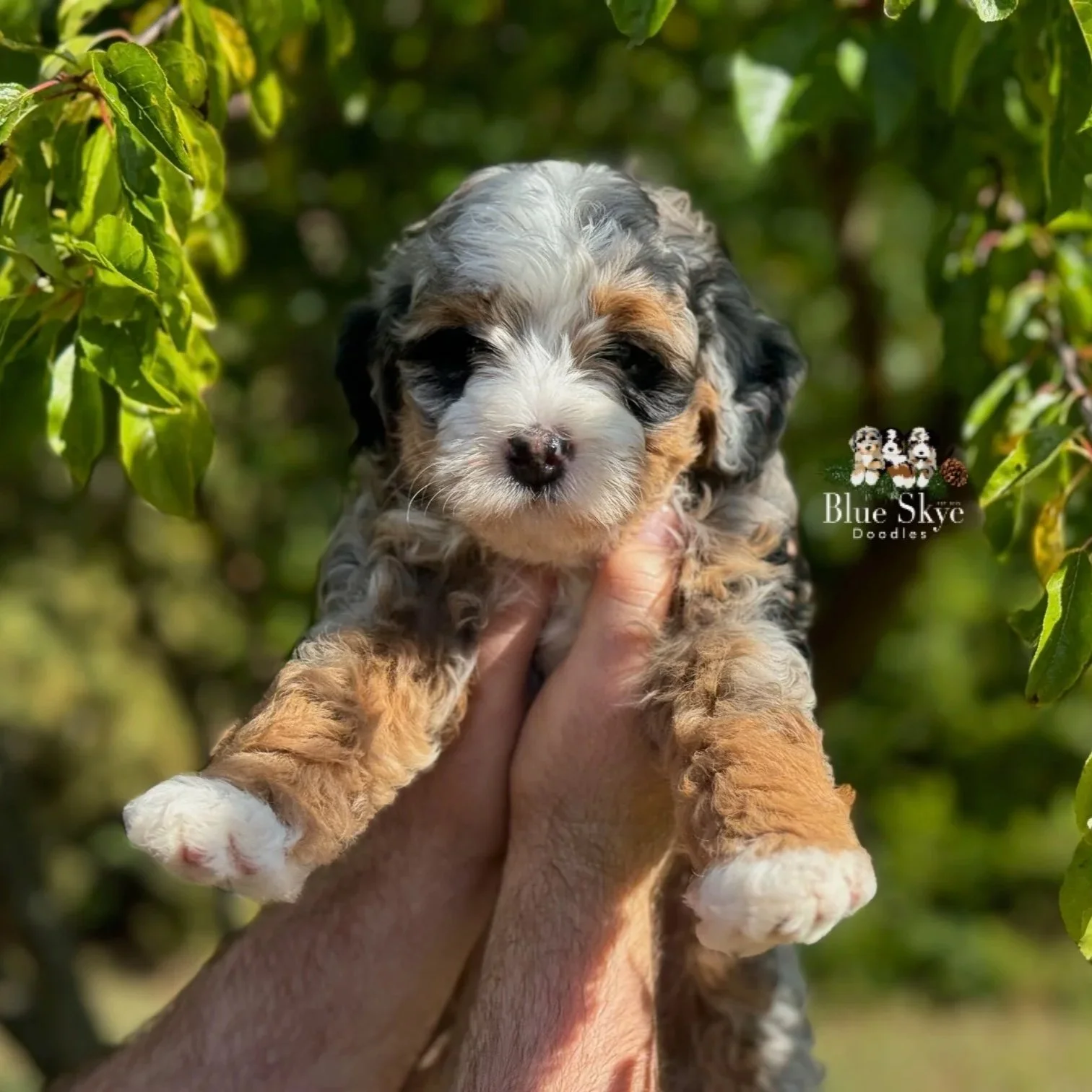
Tri means three, so a Tricolor doodle will have three colors, usually a body or base color with copper points (the brown accent on legs, paws, eyebrows etc.) and white (paws, chest, muzzle, head etc.). Bi means two, so a bicolor will have a body color and one other color, either copper accents or white.
Merle is a pattern, where the merle gene modifies the intensity of a dog’s original coat. Parti or Piebald is also a pattern. Points refer to the areas where the copper accent can appear, usually the cheeks, eyebrows, lower legs and/or chest. Markings or flash are what we often call the white accents.
No matter the color or pattern, Doodles are adorable!
Color Examples
-
![Black tricolor Australian Mountain Doodle]()
BLACK TRICOLOR
Black, Copper & White
Also known as “Traditional Tri”, the black tricolor is made up of three colors : black, copper (rust) and white. Classic Bernese Mtn. Dog color and markings. -
![Blue Skye Doodles Chocolate Tricolor]()
CHOCOLATE TRICOLOR
Chocolate, Copper & White
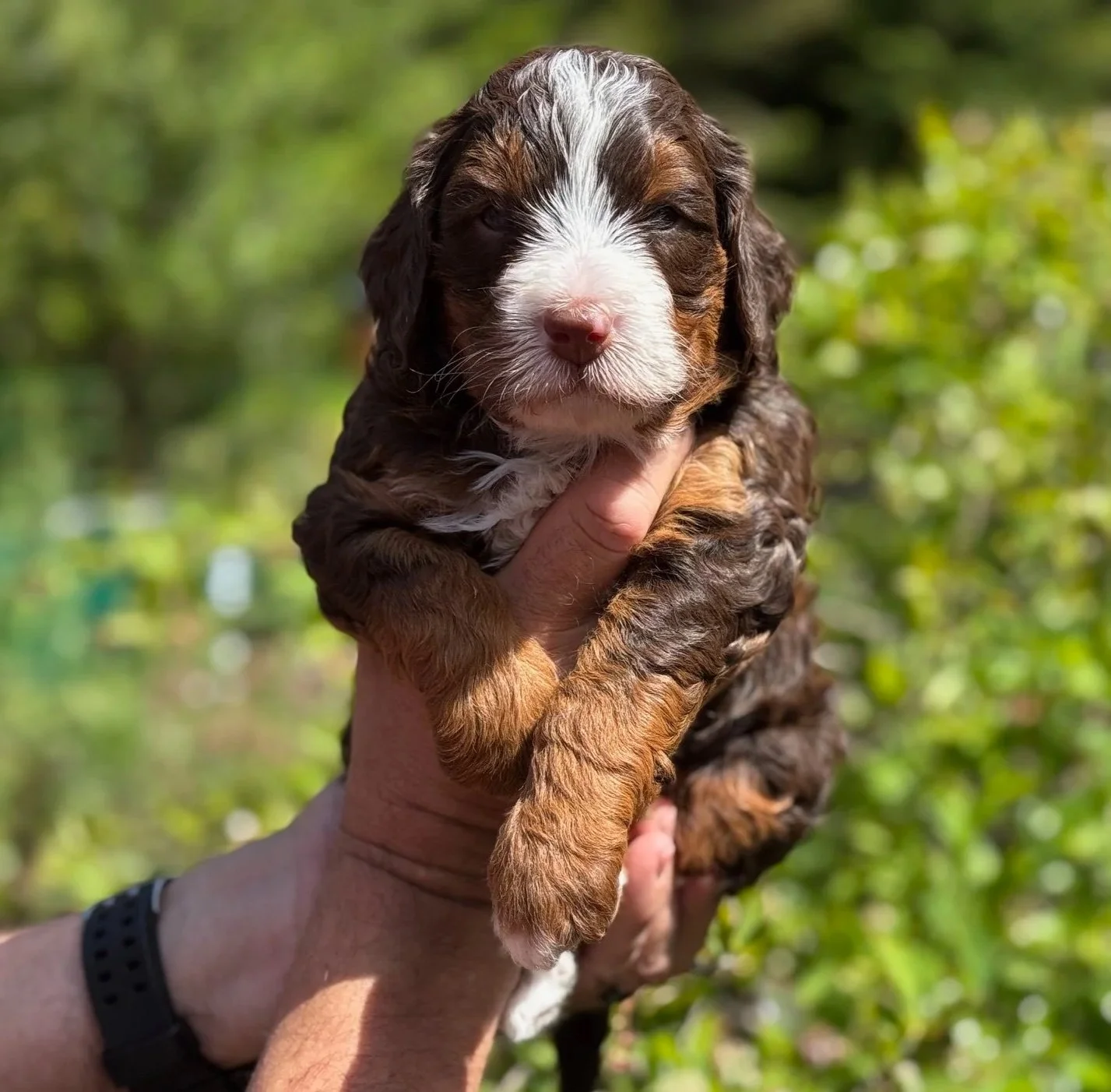
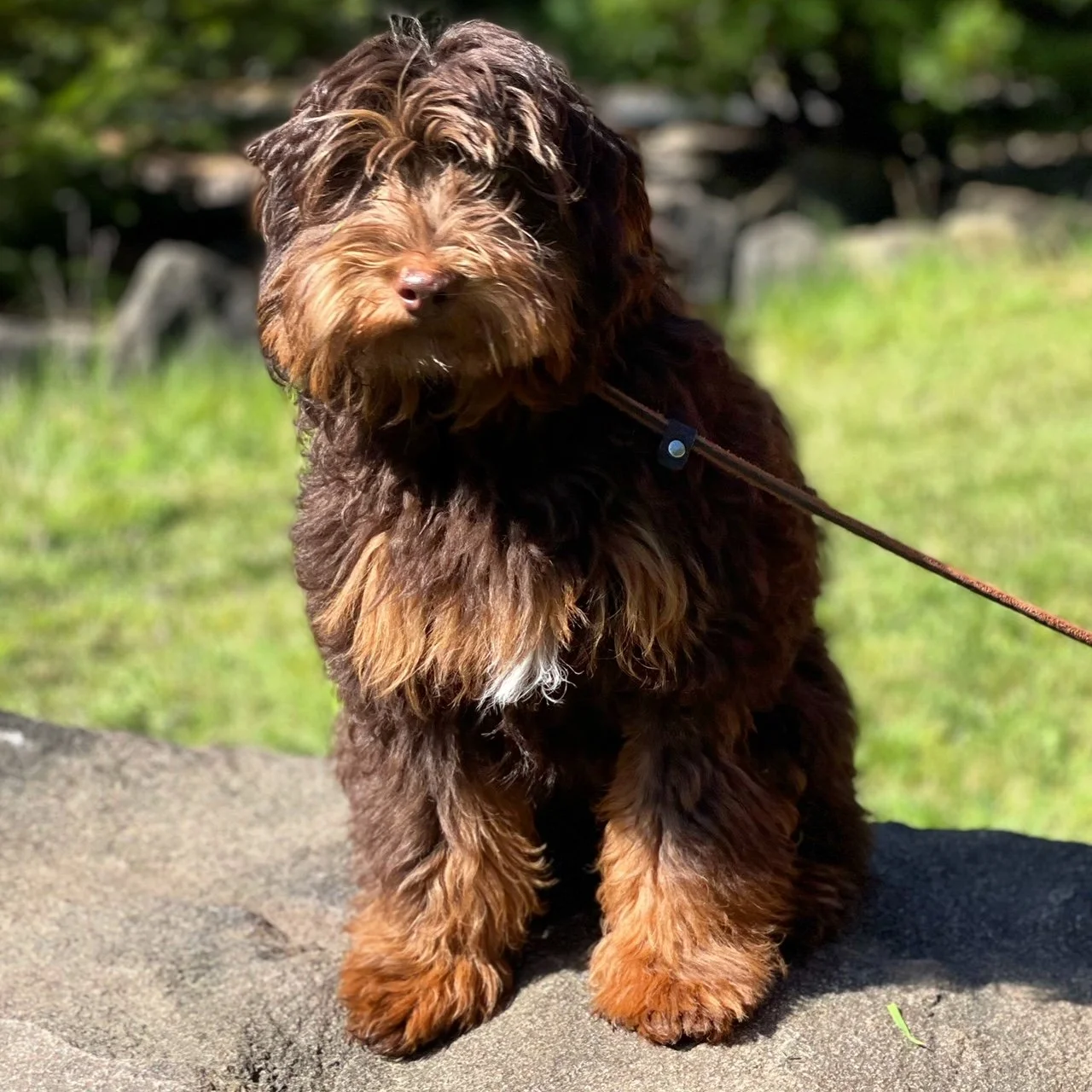
Yummy chocolate (brown), copper and white. This color is unique and harder to get. -
![Blue Skye Doodles Chocolate Phantom Doodle]()
CHOCOLATE PHANTOM
Chocolate & Copper
Phantom or bi-color is typically either black and copper (like a Doberman Pinscher) or the less common chocolate and copper. Phantoms won’t have the white (third color) that a tricolor has. -
![Red copper and white Australian Mountain Doodle]()
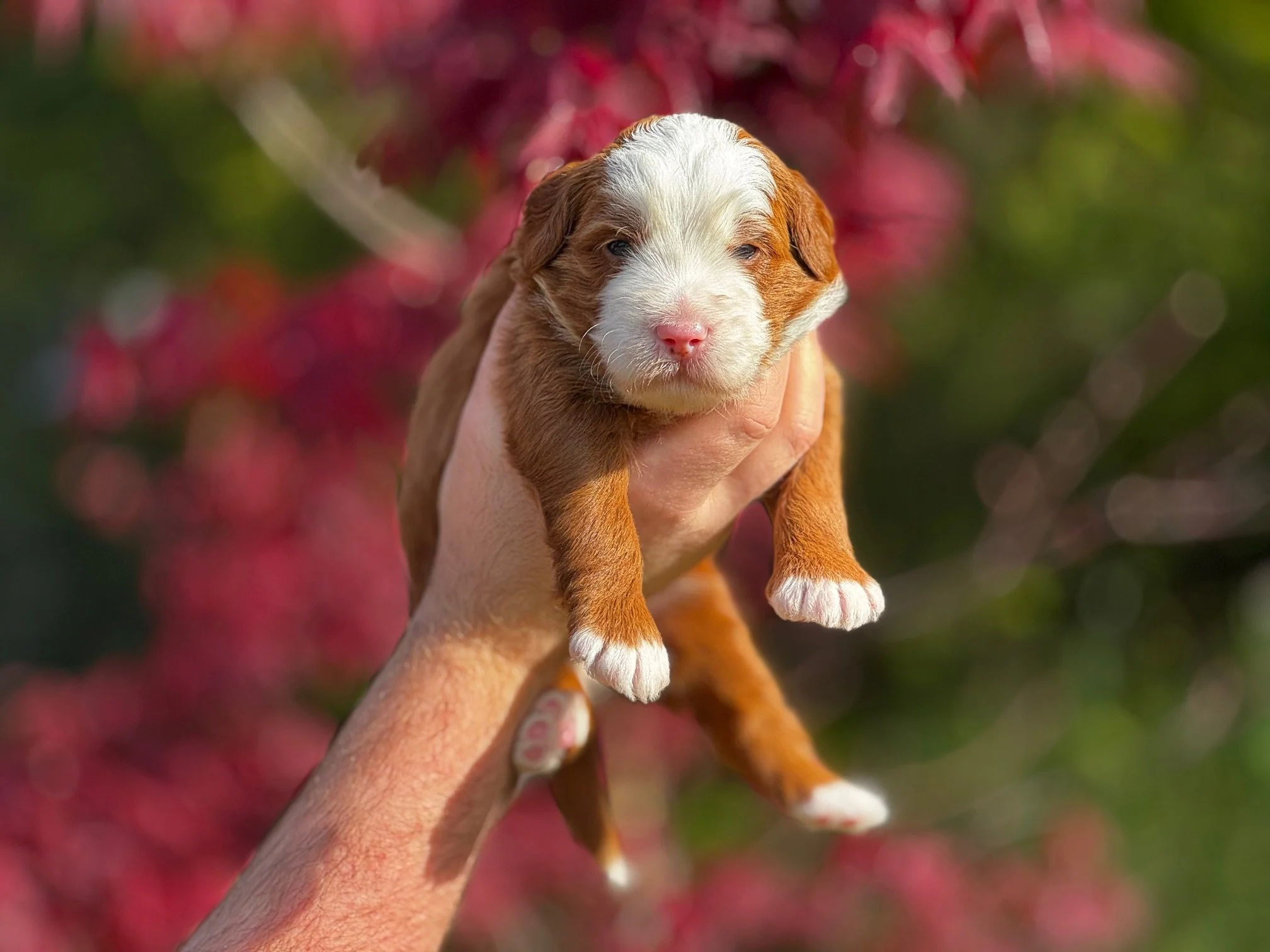
COPPER & WHITE
Copper (Red) & White
Color can vary from red, rust, copper, apricot, blonde to white. They will visibly appear as two colors even if they are genetically a tricolor because red hides copper points. -
![Blue Skye Doodles | Bernedoodles & Australian Mountain Doodles | Aussiedoodle 2016]()
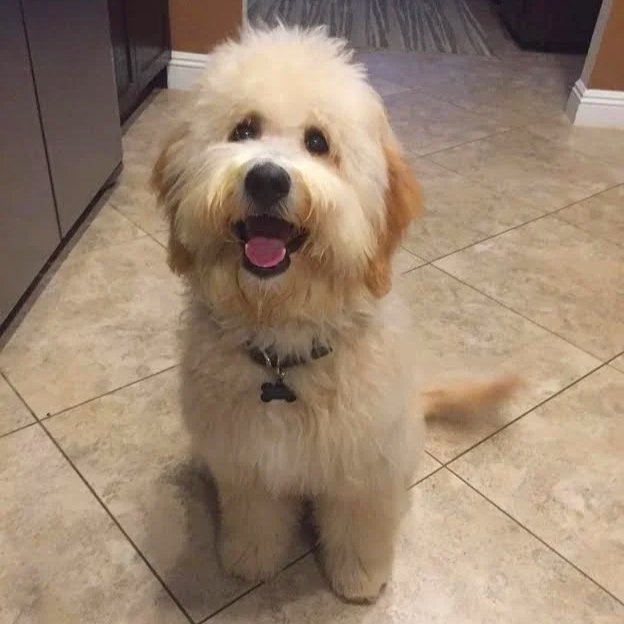
SOLID COLOR
Any Solid Color
A solid doodle can be any color all over with minimal to no white markings.
The Many Shades of Merle
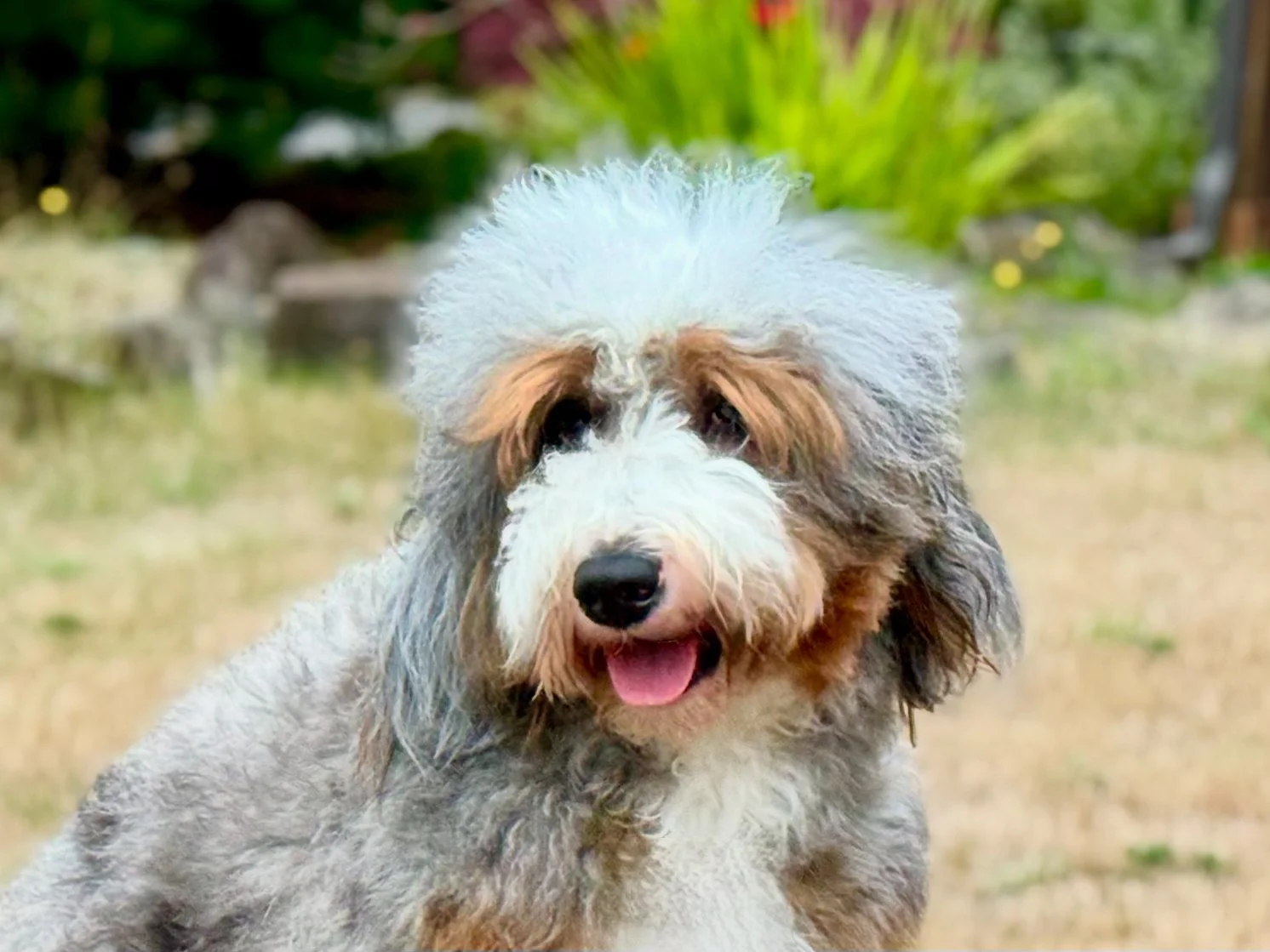
Although often referred to as a “color”, Merle is a “pattern”, creating a beautiful and unique look in doodles.
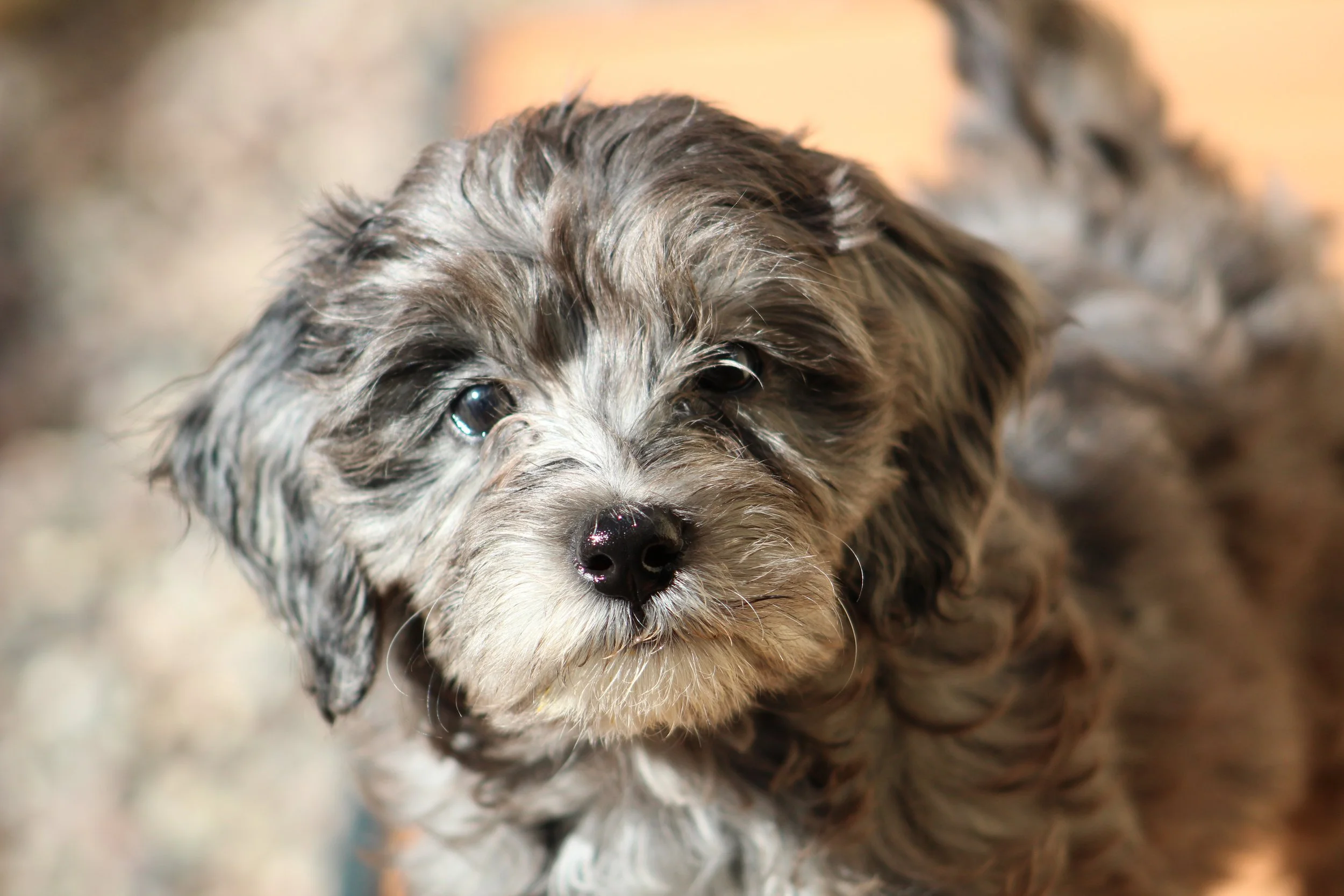
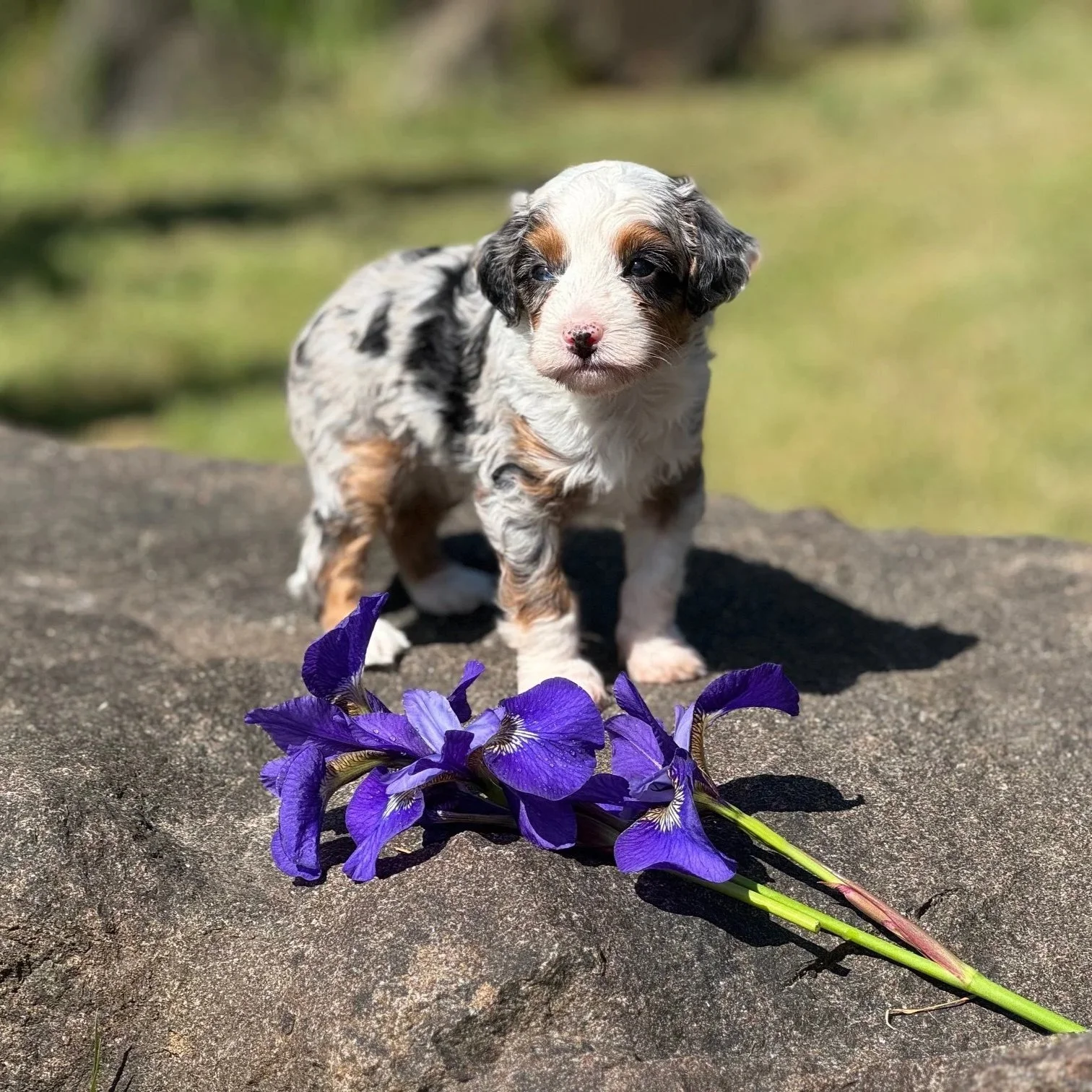
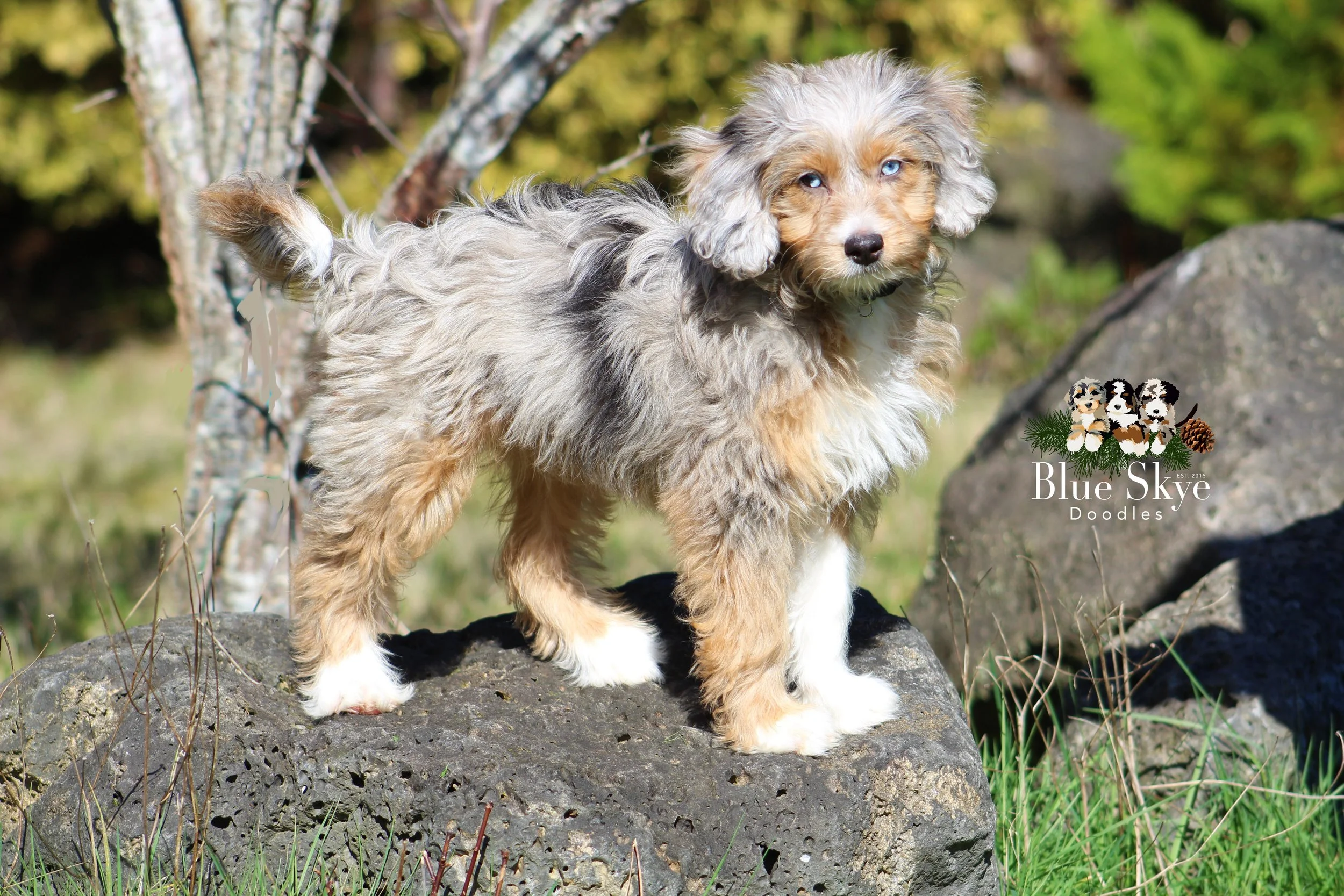
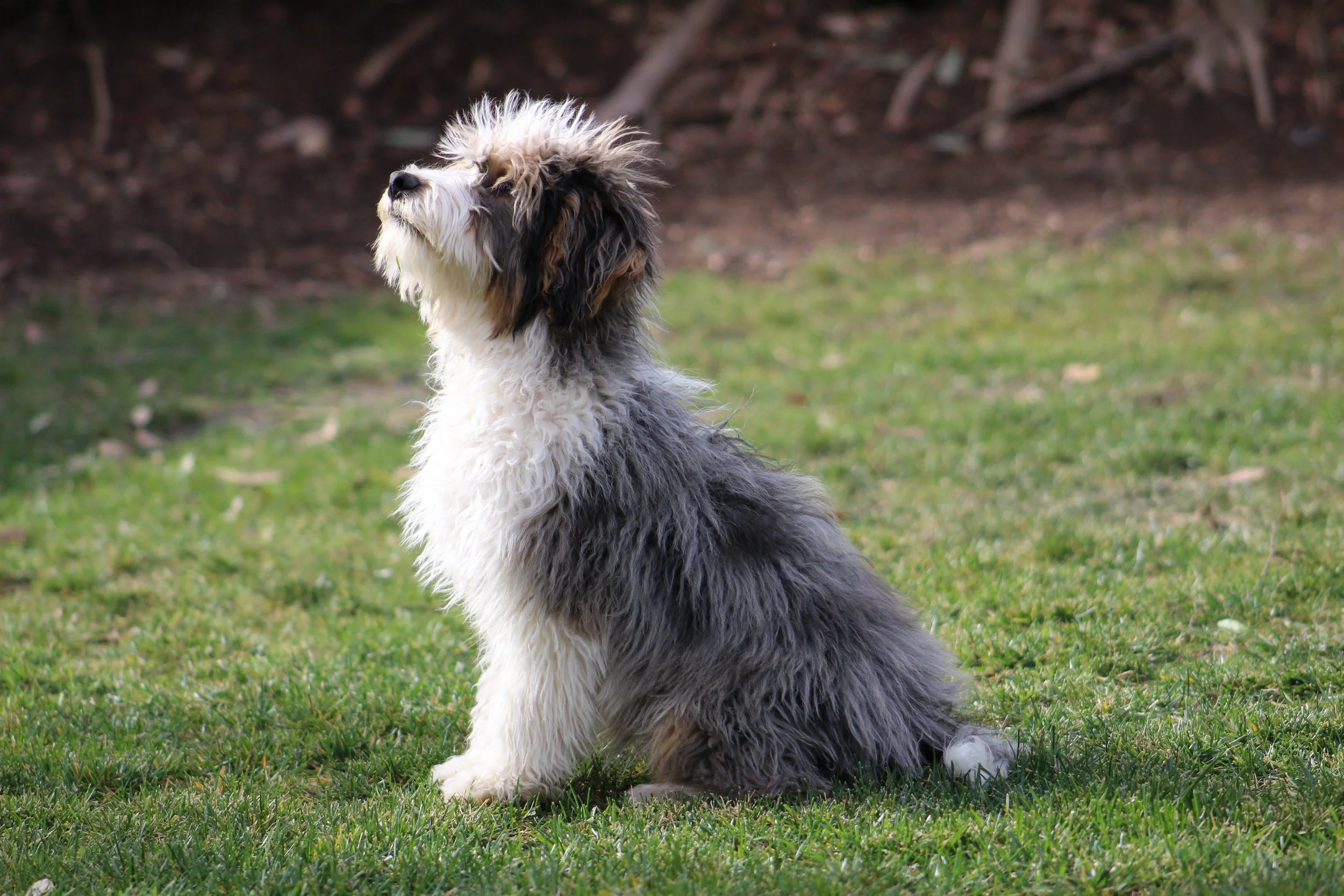
The Merle gene is a modifier and dilutes random sections of a dog’s coat so these areas appear lighter. These patches can be any size and location, leaving patches of the original color remaining and diluting other areas in various shades, all the way to white. If you were to spray bleach on black fabric, it would land in different concentrations. Some areas would remain the original black , untouched by the bleach and other areas would lighten to shades of charcoal, grey, silver or even white.
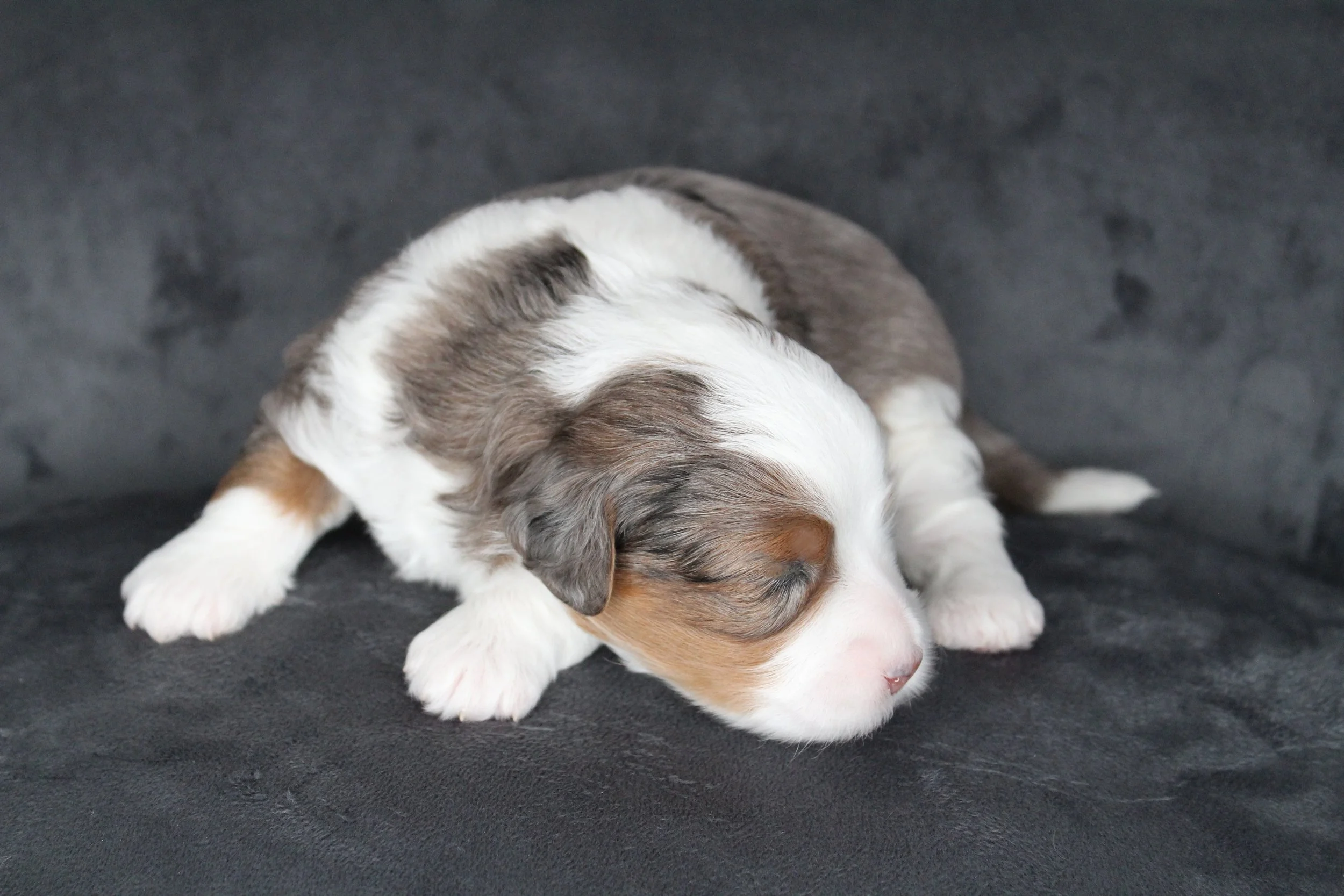
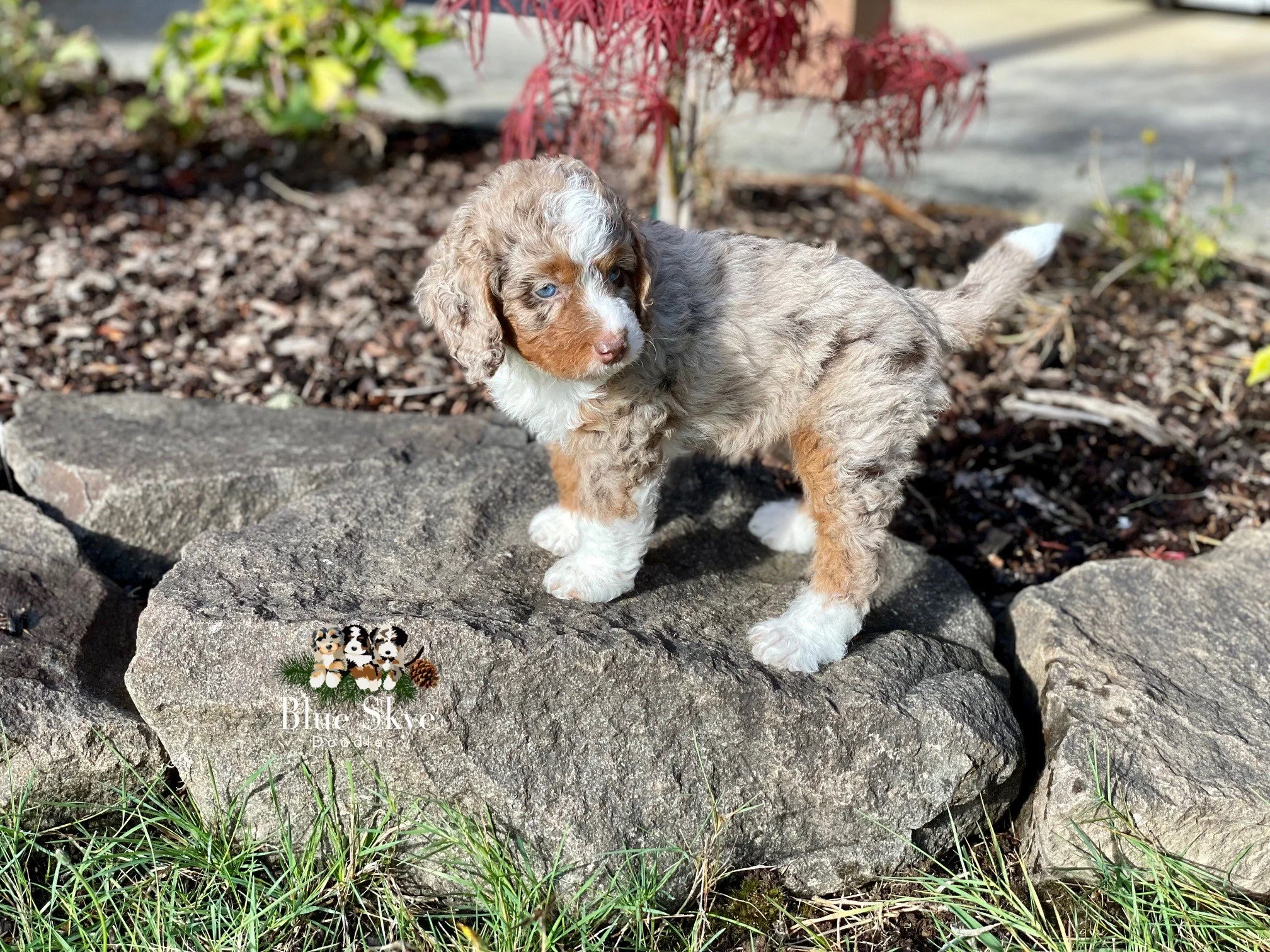
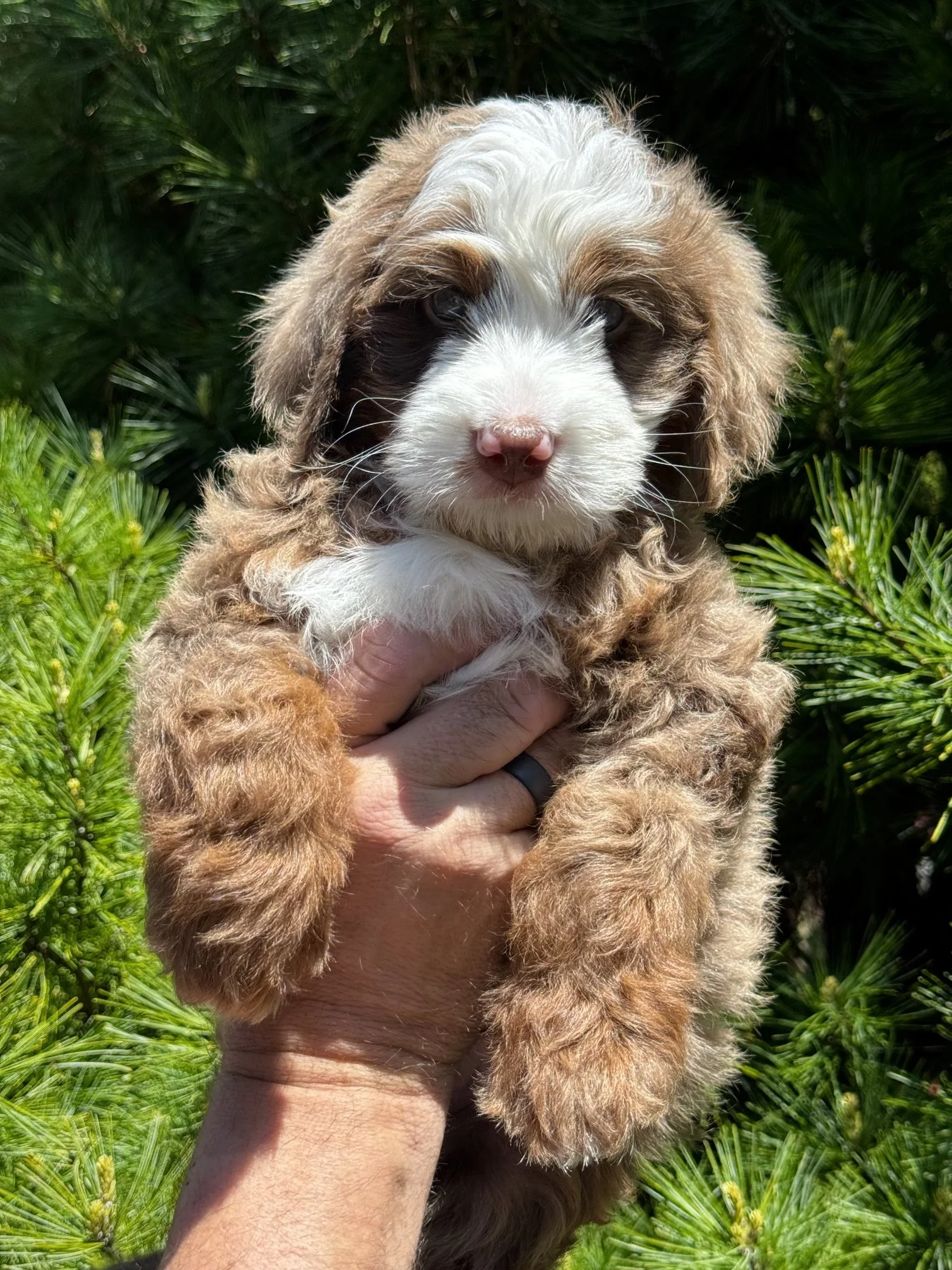
A black dog with the Merle gene is known as a blue Merle… “blue” because of its bluish gray color. A brown dog with the Merle gene is known as a red Merle in Aussies, and a chocolate Merle in Australian Mountain Doodles. A dog can be a solid Merle, a Merle parti (piebald), a Merle phantom or a Merle tricolor.
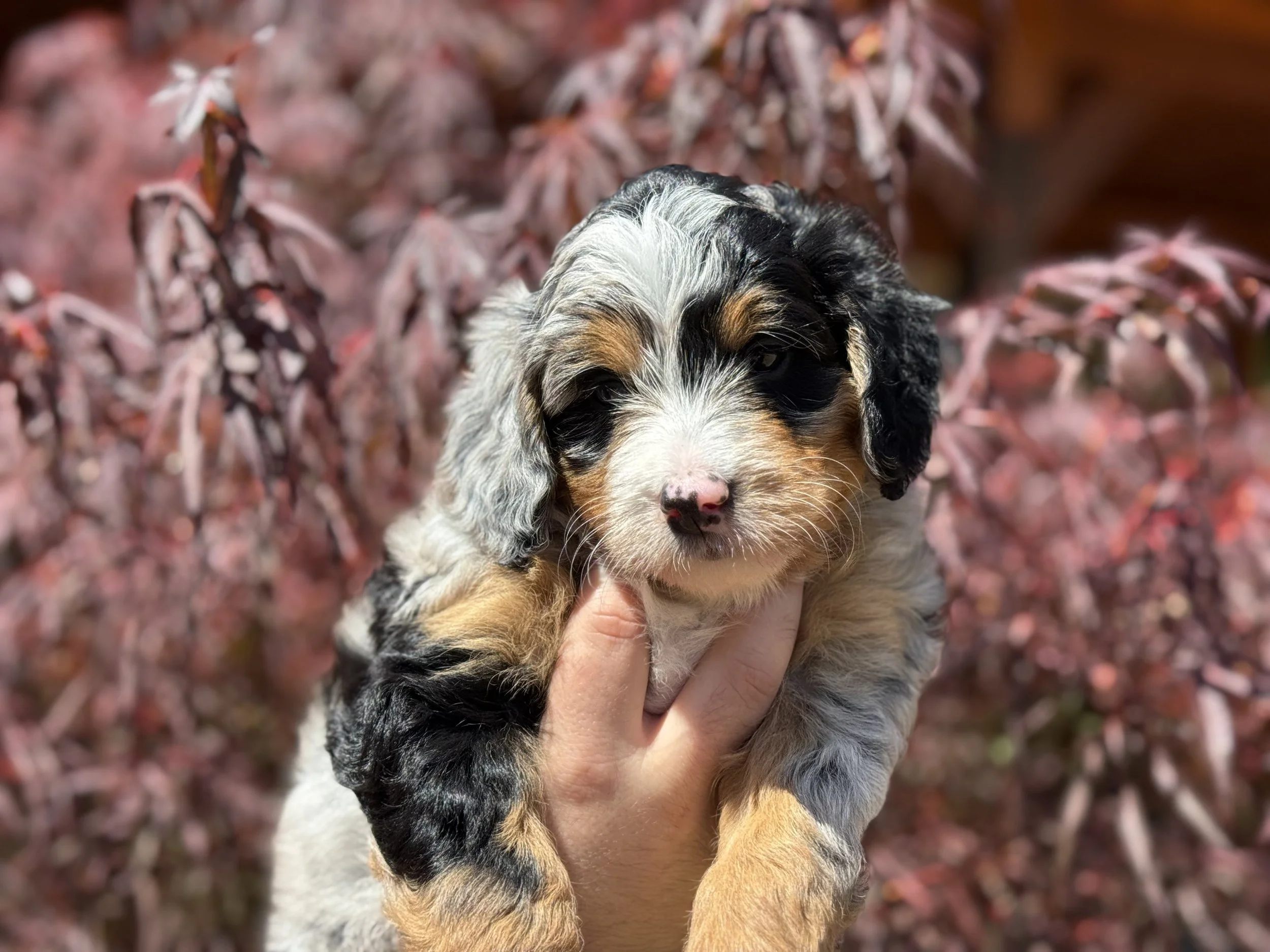
We love the merle look and the kaleidoscope of patterns it creates in our Bernedoodles and Australian Mountain Doodles. No two are alike!
Merle & Parti Pattern Examples
-
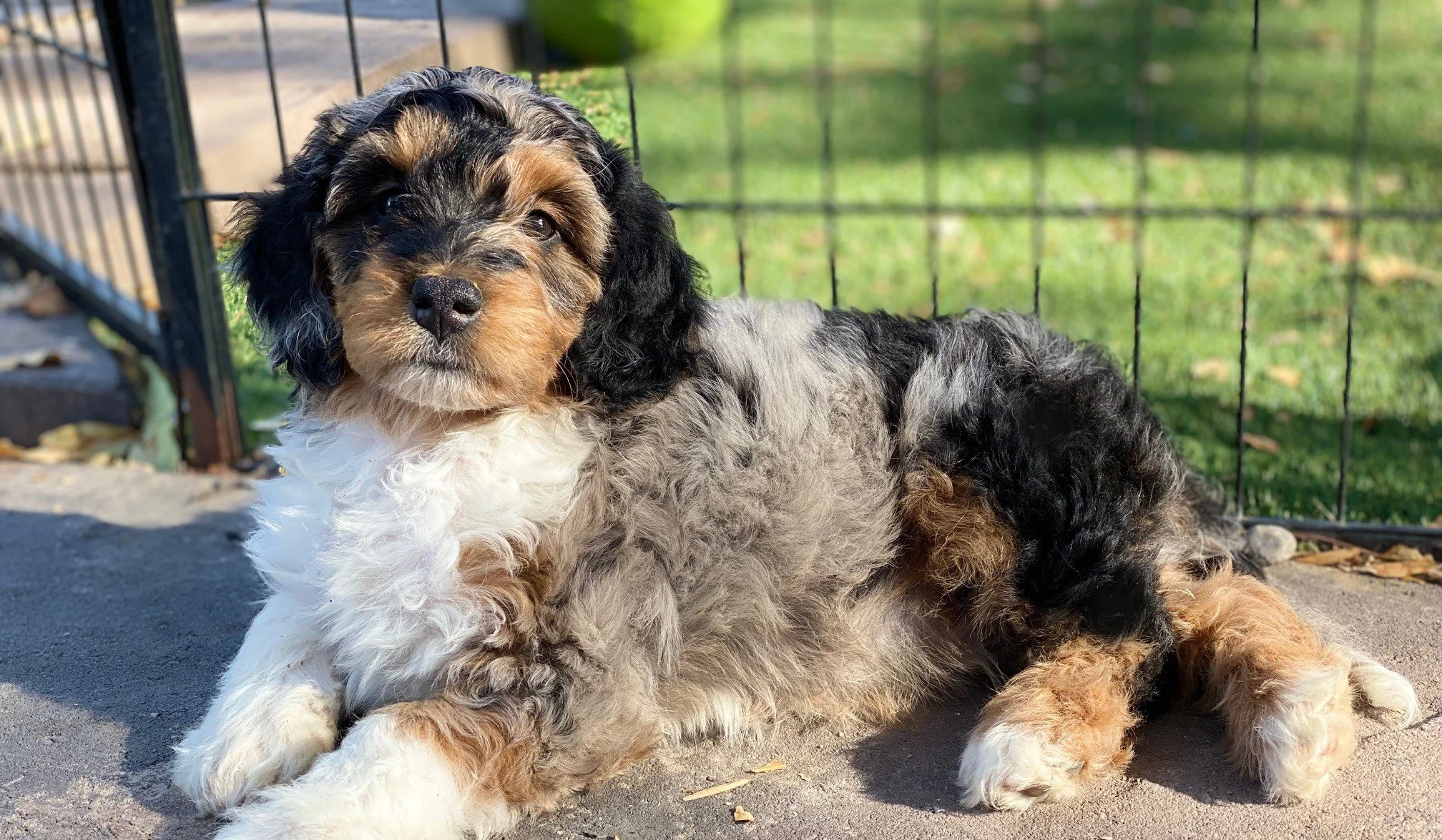
![Blue Skye Doodles Merle Tricolor Puppy]()
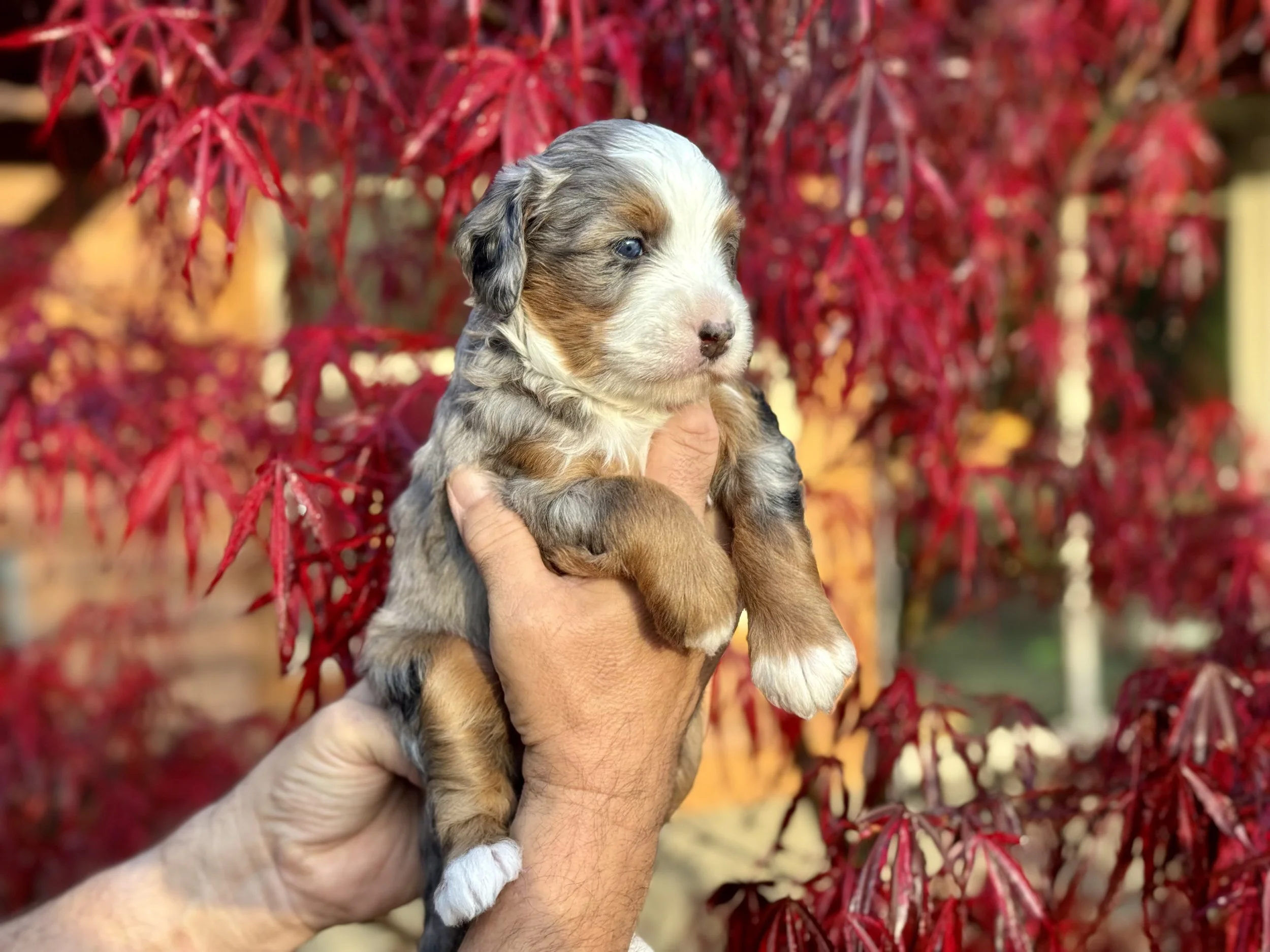
BLUE MERLE TRICOLOR
Blue Merle, Copper & White
Blue merles will be a bluish gray pattern of various intensity with copper points and white markings. -
![Blue Skye Doodles Chocolate Merle Tricolor]()
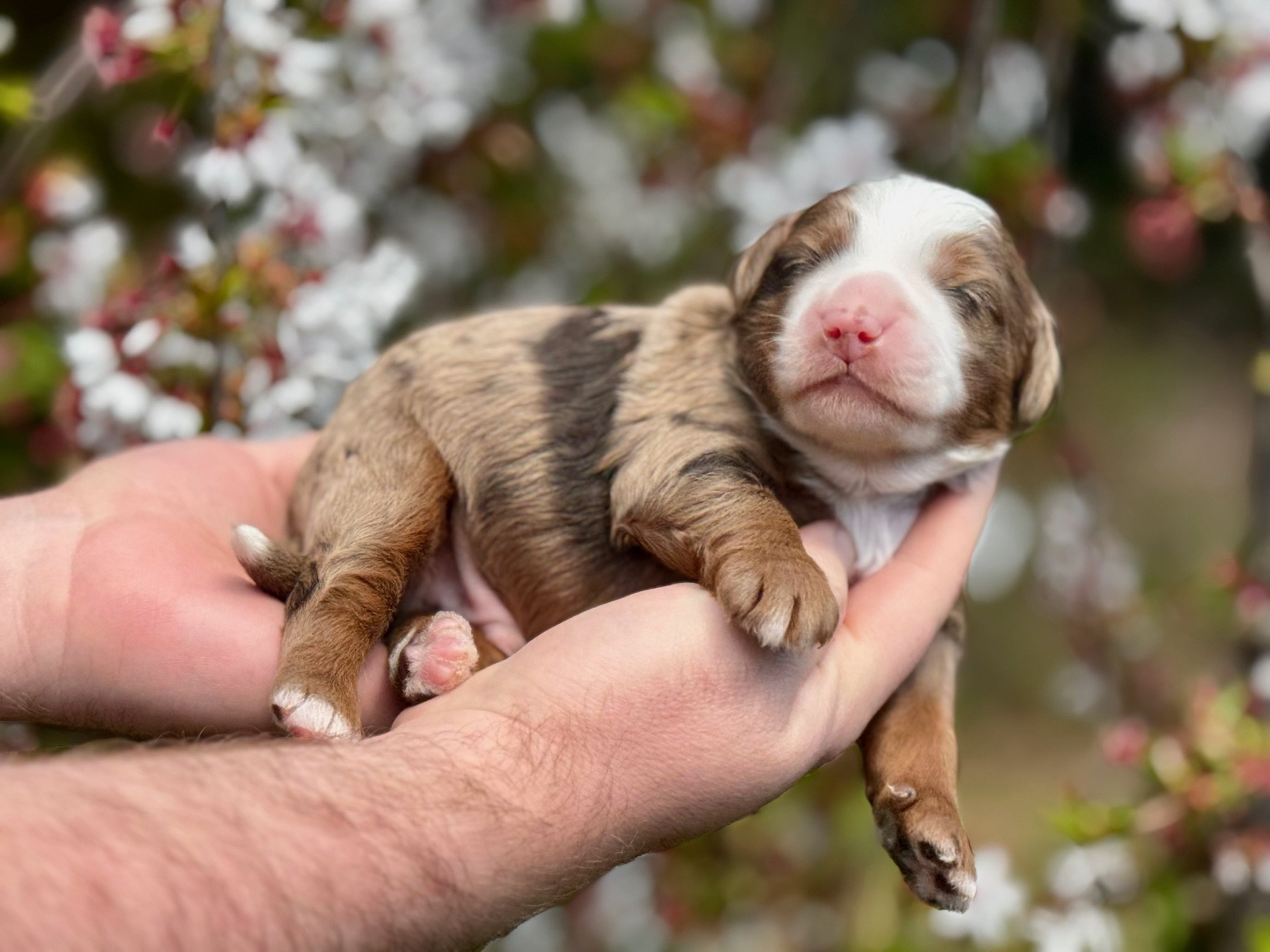
CHOCOLATE MERLE TRICOLOR
Chocolate Merle, Copper & White
A chocolate (brown) body color, modified by the Merle gene so it appears various shades of dark brown to white. -
![Tricolor Parti]()
BLACK TRICOLOR PARTI
Black, White & Copper
Parti pattern, also called Piebald pattern is typically 50% white and 50% of another color although the percentages can vary. Parti patterns can be bicolor or tricolor. -
![Solid blue merle aussiedoodle puppy]()
MERLE SOLID
Merle pattern with no copper or white
This is a solid color modified by the merle gene so it’s an allover merle pattern. So what would have been a solid black dog, now has a uniquely patterned coat. -
![parti pattern merle puppy]()
BLUE MERLE TRICOLOR PARTI
Blue merle pattern with copper & white
Parti pattern with more body color, copper points and lots of flashy white.
The Uniqueness of Merle Patterns:
When we say… no two merle patterns are alike, this is what we mean.
-
![Bernedoodle micro mini merle]()
Blue Merle Tri
-
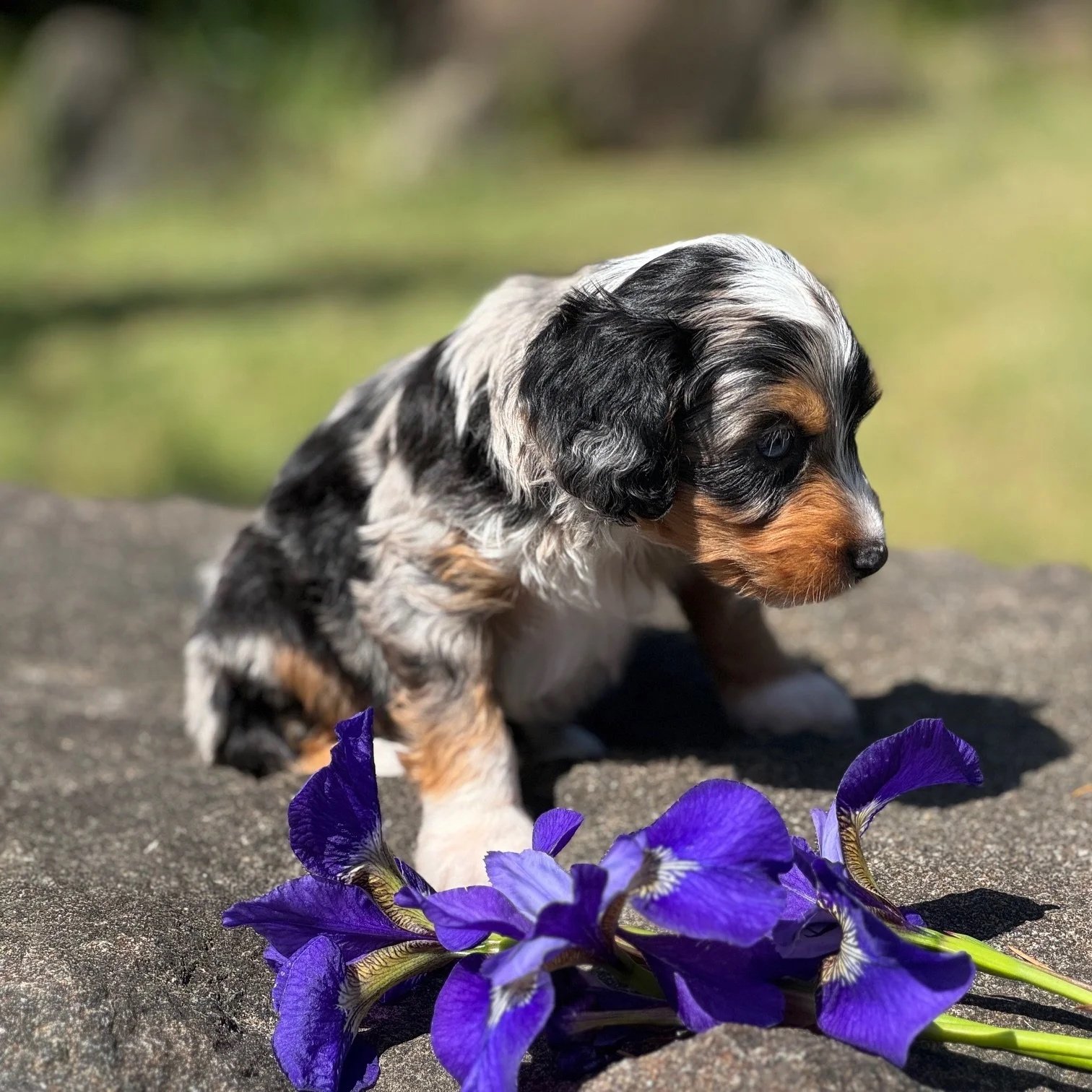
![Merle Australian Mountain doodle on a rock]()
Blue Merle Tri
-
![Blue Skye Doodles | Bernedoodles & Australian Mountain Doodles | Merle Aussie Bernedoodle]()
Blue Merle Tri
-
![Chocolate merle tricolor Bernedoodle]()
Chocolate Merle Tri
-
![Blue Skye Doodles | Australian Mountain Doodles & Bernedoodles | Chocolate Merle Tricolor]()
Chocolate Merle Tri
-
![Blue Skye Doodles | Bernedoodles & Aussie Bernedoodles | Mini Chocolate Merle Tri Australian Mountain Doodle]()
Chocolate Merle Tricolor Australian Mountain Doodle
-
![Blue Skye Doodles | Australian Mountain Doodles & Bernedoodles | Blue Merle Tricolor Aussiedoodle]()
Blue Merle Tri
-
![Blue Skye Doodles | Australian Mountain Doodles & Bernedoodles | Merle Tricolor]()
Blue Merle Tri
-
![Blue Skye Doodles | Australian Mountain Doodles & Bernedoodles | Chocolate Merle Tricolor Australian Mtn. Doodle]()
Chocolate Merle Tri
-
![Blue Skye Doodles | Bernedoodles & Australian Mountain Doodles | Blue Merle Tri Bernedoodle with curly coat]()
Blue Merle Tri
-
![Blue Skye Doodles | Bernedoodles & Aussie Bernedoodles | Merle Tri Aussie Mountain Doodl]()
Merle Tricolor
-
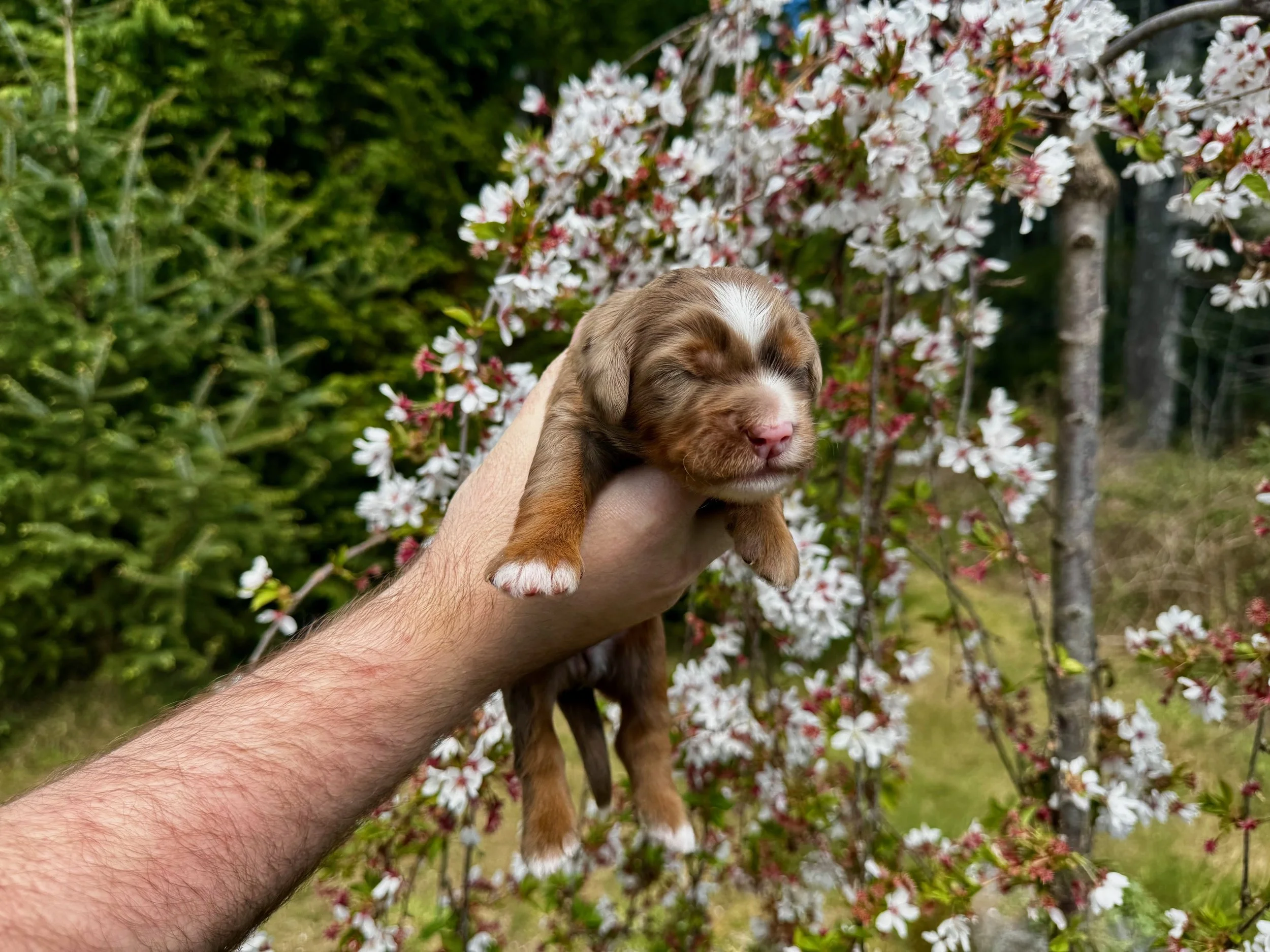
![Person holding a small chocolate merle Aussie bernedoodle puppy in front of a flowering tree with white and pink blossoms.]()
Chocolate Merle Tri
-
![Blue Skye Doodles | Merle tricolor Australian Mountain Doodle]()
Blue Merle Tri
-
![Blue Merle Tricolor Aussie Bernedoodle Puppy]()
Blue Merle Tri
-
![Flashy merle tricolor puppy]()
Blue Merle Tri
-
![Blue Merle & White Parti Aussiedoodle]()
Blue Merle & White (bi-color)

Coat Types
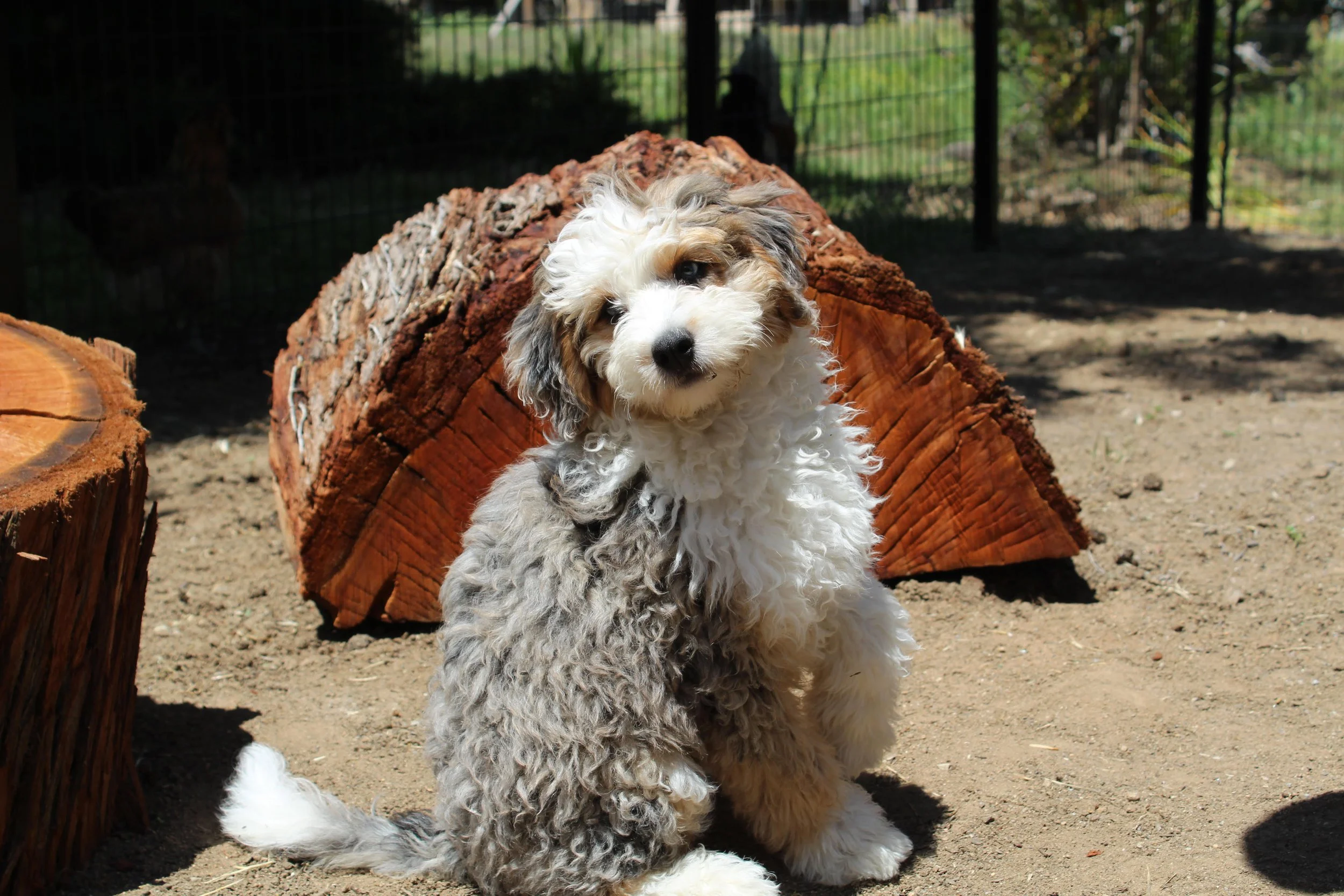
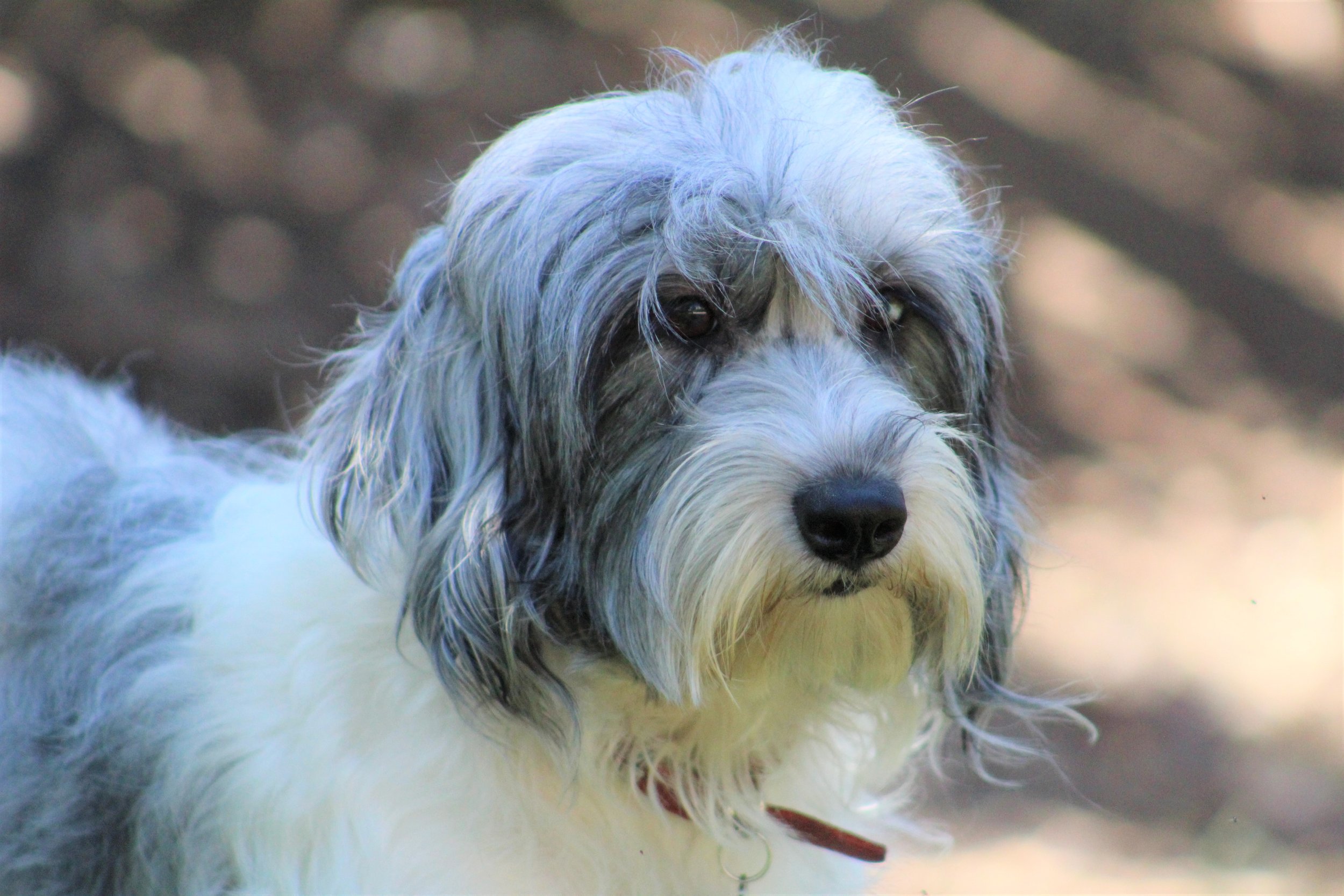
Doodles essentially have three coat types: Straight, Wavy or Curly
The type of coat they have will depend upon genetics (how many copies of coat curl they inherited from their parents) as well as their own individual inherited traits from parents and grandparents. So a puppy that genetically has one copy of coat curl, may have a straighter or wavier coat then it’s sibling with the same inherited coat type. Just like human hair. Our Aussie Bernedoodles and Bernedoodles can will have straight or wavy coats. We strive for low shedding and low allergen qualities so will only produce furnished (not smooth faced) puppies.
To read more about what you need to know about grooming your doodle and maintaining the different coat types, click the link below.
What Will My Doodle Look Like?
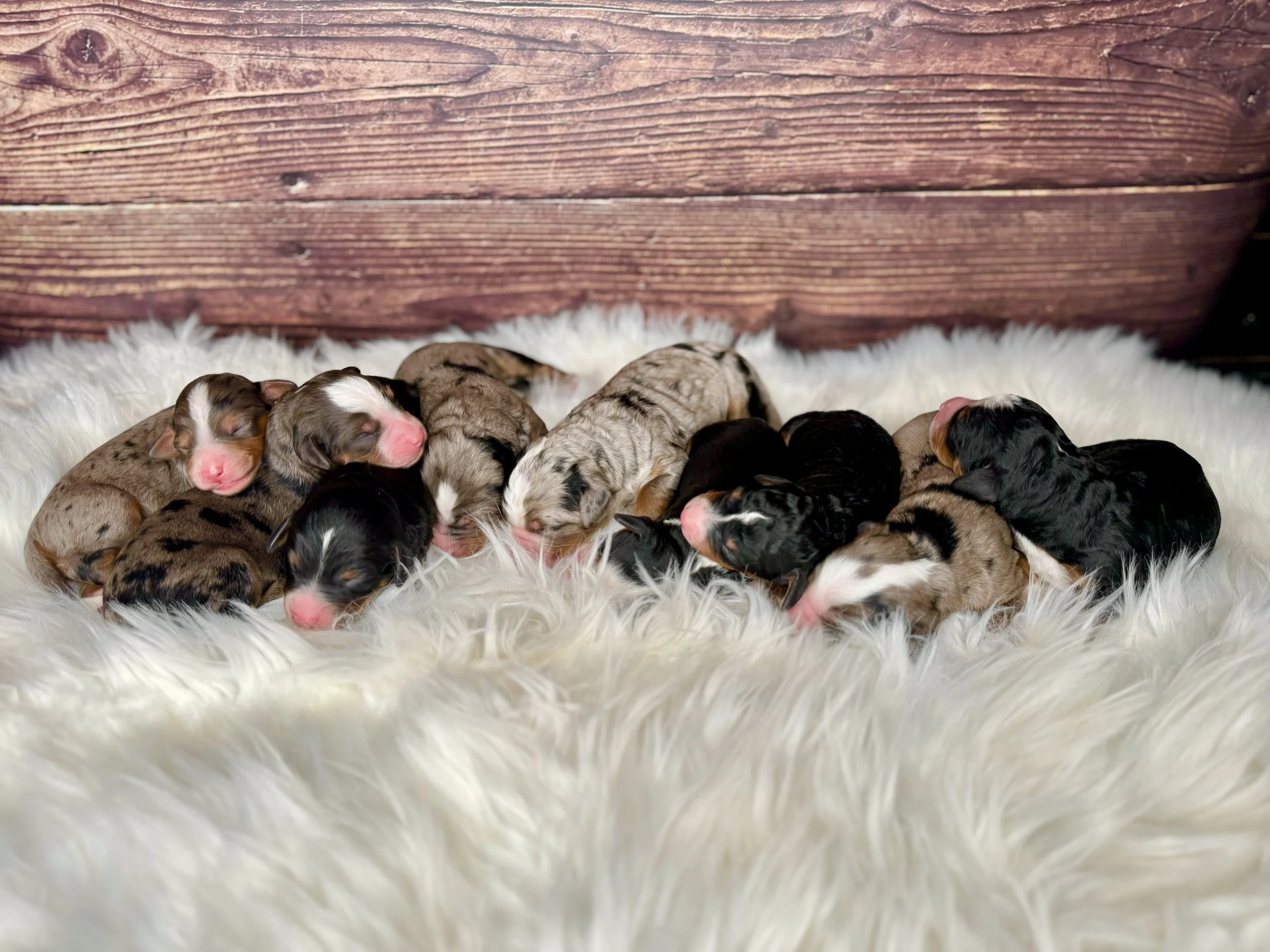
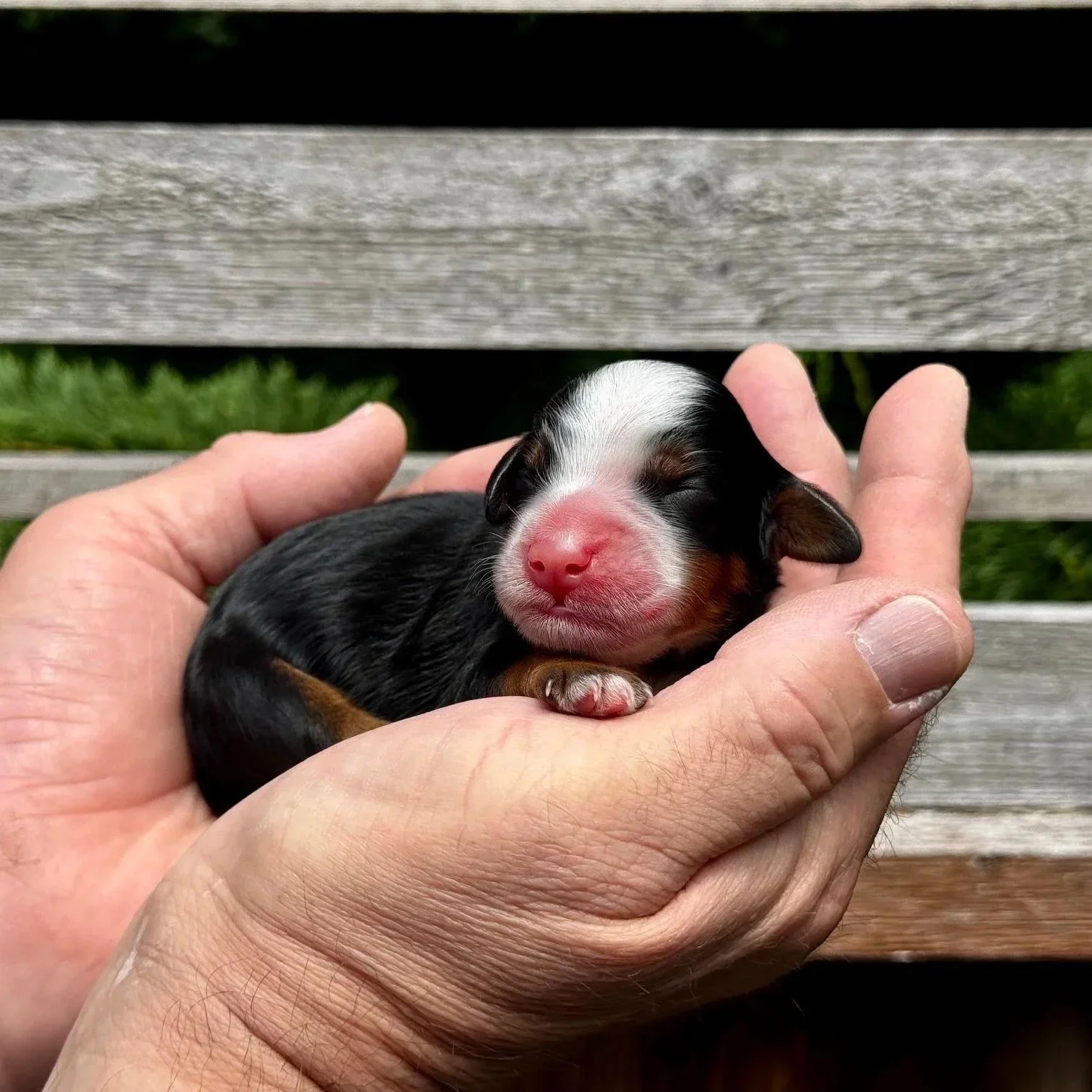
It can be difficult to look at a tiny two week old puppy and have an idea what they will. look like when older. As a breeder with over a decade of experience, it is easier for us to see the potential in each newborn face. Young puppies sometimes have very dark pink noses (a sign of warmth and good healthy). Sometimes their ears stick out funny (a result of their positioning in the womb). Puppies frequent have pink noses that fill in gradually as they age, so that they look polka dot or blotchy for a period of time. And then there is what we affectionately call the “guinea pig” stage where they just look awkward before looking like cute puppies. We have seen it all. So here is a bit of an evolution from newborn to when your puppy goes home at 8 weeks of age.
Watch me grow…

5 Weeks
6 Weeks


7 Weeks
8 Weeks


Newborn
2 Weeks
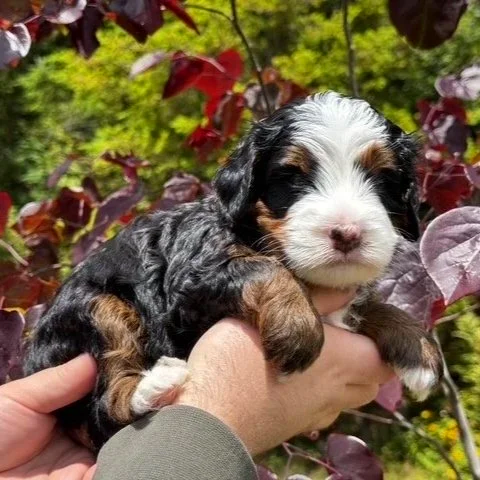
3 Weeks
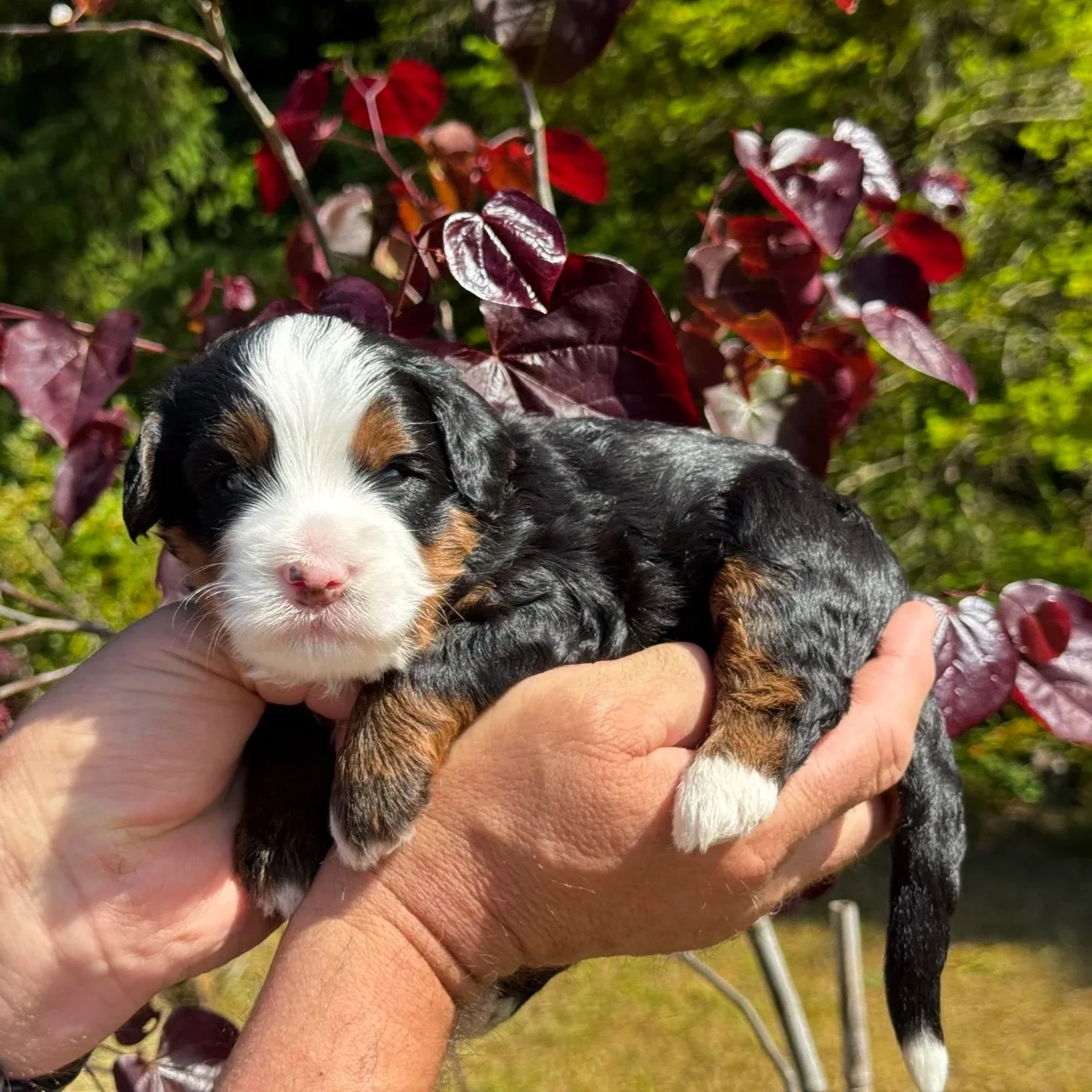
4 Weeks
Will Your Doodle Stay the Same Color?
This is a complex question that depends upon the intricate set of genes inherited from the parents and grandparents as well as Mother Nature. In the early years of breeding doodles, we didn’t have the genetic testing that is available now so we were often flying blind trying to figure out what combinations would produce the desirable outcome for coat, color, trim, blazes, furnishings and more.
Even though we have considerably more tests available, not all of them give us all the answers we need. Some tests like the dilution gene have been available for many years but even dogs with no copies of the gene, can fade in body or points. This has been very frustrating to most of us breeders. I personally have retired otherwise perfect parents because their puppies had significant fading. Puppies born with great color that unexpectedly lightened.
Like most people, doodle hair often lightens as they age. Sable’s will fade to some extent and may end up an all over Carmel or cream body with adorable dark ears. Puppies born jet black very often fade to blue or silver. Brown (chocolate) may face to silver beige and dark red puppies may fade to apricot. Copper points may also lighten over time.
The Poodle genes introduced a lot of fading, much of which is still un-testable. The latest genetic test available is for intensity and is expected to show if a dog will retain or lose their color intensity and/or if they can pass the gene on to progeny. However the testing is still inconclusive and a dog that has retained a dark body color but it’s copper has faded to cream can still come up as full intensity. So it is another tool in our tool bag but it is unfortunately not the definitive answer we hoped for.
We still feel the most important traits in any doodle should be temperament, health and allergy friendliness. While we (almost) obsessively strive for the “ideal” look in our doodles, we keep those original tenets topmost of mind in our quest for perfection.